EASAPART66.EUAviation Learning
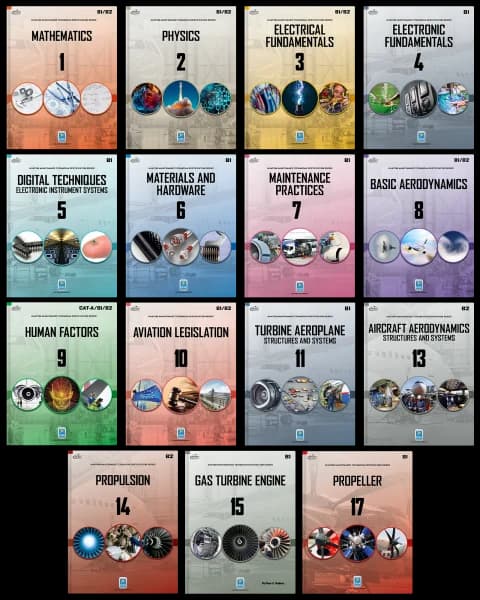
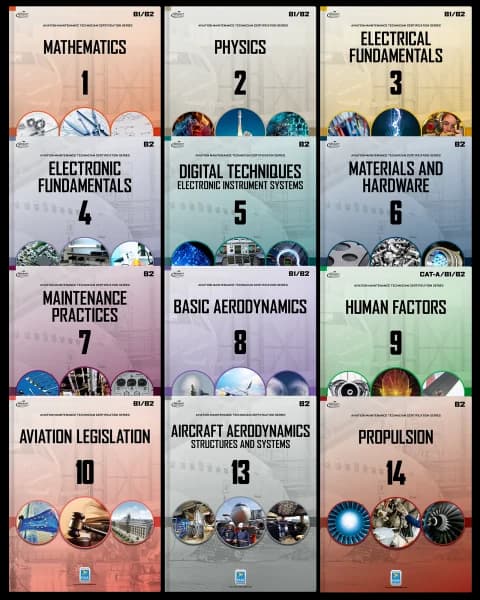
B2 Avionics Complete Manual Library cover
Syllabus-aligned (EU) 2023/989

B2 Avionics Complete Manual Library

12 volumes · 12 modules

Executive overview

The complete B2 route: shared foundations, the avionic editions of the technical modules, avionic systems and propulsion from the avionics viewpoint. The library bundles 12 volumes, each one written for the licence scope it serves, so there is no duplicated or out-of-category material. Choose the format that suits you: printed books, eBooks or both.

Together the volumes cover 179 syllabus subjects of Regulation (EU) 2023/989, Part-66 Appendix I for B2. One purchase gives you the whole reading list.

Plan your study by module: finish a volume, practise its competencies in the Quiz Engine, then sit the timed exam simulation. The Online Senior Instructor tracks which volumes to open next.

How it helps you pass the exam

  • Consistent structure from volume to volume, so you spend your hours learning rather than re-learning how to read the book.
  • A single, complete reading list for the whole route, mapped to the syllabus subject by subject.
  • Built for B2 candidates preparing the avionics and electrical stream end to end.

What is included

Competencies targeted (EASA Part-66 syllabus)

179 syllabus subjects, each shown with the knowledge level examined for the licence scope of this product. Level 1 is familiarisation, Level 2 is general knowledge and Level 3 is detailed knowledge.

Show all 179 subjects
  • 1.1ArithmeticL2
  • 1.2(a)Algebra — Simple algebraic expressionsL2
  • 1.2(b)Algebra — EquationsL1
  • 1.3(a)Geometry — Simple geometrical constructionsL1
  • 1.3(b)Geometry — Graphical representationL2
  • 1.3(c)Geometry — TrigonometryL2
  • 2.1MatterL2
  • 2.2.1Mechanics — StaticsL2
  • 2.2.2Mechanics — KineticsL2
  • 2.2.3(a)Mechanics — Dynamics: Mass, force and energyL2
  • 2.2.3(b)Mechanics — Dynamics: Momentum and conservation of momentumL2
  • 2.2.4(a)Mechanics — Fluid dynamics: Gravity and densityL2
  • 2.2.4(b)Mechanics — Fluid dynamics: Viscosity; compressibility on fluids; static, dynamic, and total pressureL2
  • 2.3(a)Thermodynamics — TemperatureL2
  • 2.3(b)Thermodynamics — HeatL2
  • 2.4Optics (light)L2
  • 2.5Wave motion and soundL2
  • 3.1Electron theoryL1
  • 3.2Static electricity and conductionL2
  • 3.3Electrical terminologyL2
  • 3.4Generation of electricityL1
  • 3.5Sources of DC electricityL2
  • 3.6DC circuitsL2
  • 3.7(a)Resistance/resistor — ResistanceL2
  • 3.7(b)Resistance/resistor — ResistorsL1
  • 3.8PowerL2
  • 3.9Capacitance/capacitorL2
  • 3.10(a)Magnetism — Theory of magnetismL2
  • 3.10(b)Magnetism — Magnetomotive forceL2
  • 3.11Inductance/inductorL2
  • 3.12DC motor/generator theoryL2
  • 3.13AC theoryL2
  • 3.14Resistive (R), capacitive (C) and inductive (L) circuitsL2
  • 3.15TransformersL2
  • 3.16FiltersL1
  • 3.17AC generatorsL2
  • 3.18AC motorsL2
  • 4.1.1(a)Semiconductors, diodes — Description and characteristicsL2
  • 4.1.1(b)Semiconductors, diodes — Operation and functionL2
  • 4.1.2(a)Semiconductors, transistors — Description and characteristicsL2
  • 4.1.2(b)Semiconductors, transistors — Construction and operationL2
  • 4.1.3(a)Semiconductors, integrated circuits — Basic description and operationL2
  • 4.1.3(b)Semiconductors, integrated circuits — Description and operationL2
  • 4.2Printed circuit boardsL2
  • 4.3(a)Servomechanisms — PrinciplesL2
  • 4.3(b)Servomechanisms — Construction, operation, and useL2
  • 5.1Electronic instrument systemsL1
  • 5.2Numbering systemsL2
  • 5.3Data conversionL2
  • 5.4Data busesL2
  • 5.5(a)Logic circuits — Identification and applicationsL2
  • 5.5(b)Logic circuits — Interpretation of logic diagramsL2
  • 5.6(a)Basic computer structure — Computer terminology and technologyL2
  • 5.6(b)Basic computer structure — Computer operationL2
  • 5.7MicroprocessorsL2
  • 5.8Integrated circuitsL2
  • 5.9MultiplexingL2
  • 5.10Fibre opticsL2
  • 5.11Electronic displaysL2
  • 5.12Electrostatic sensitive devicesL2
  • 5.13Software management controlL2
  • 5.14Electromagnetic environmentL2
  • 5.15Typical electronic/digital aircraft systemsL1
  • 6.1(a)Aircraft materials, ferrous — Alloy steels used in aircraftL1
  • 6.1(b)Aircraft materials, ferrous — Testing of ferrous materialsL1
  • 6.1(c)Aircraft materials, ferrous — Repair and inspection proceduresL1
  • 6.2(a)Aircraft materials, non-ferrous — CharacteristicsL1
  • 6.2(b)Aircraft materials, non-ferrous — Testing of non-ferrous materialsL1
  • 6.2(c)Aircraft materials, non-ferrous — Repair and inspection proceduresL1
  • 6.3.1(a)Composite and non-metallic other than wood and fabric — CharacteristicsL2
  • 6.3.1(c)Composite and non-metallic other than wood and fabric — Repairs and inspection proceduresL1
  • 6.4(a)Corrosion — Chemical fundamentalsL1
  • 6.4(b)Corrosion — Types of corrosionL2
  • 6.5.1Fasteners — Screw threadsL2
  • 6.5.2Fasteners — Bolts, studs, and screwsL2
  • 6.5.3Fasteners — Locking devicesL2
  • 6.5.4Fasteners — Aircraft rivetsL1
  • 6.6(a)Pipes and unions — IdentificationL2
  • 6.6(b)Pipes and unions — Standard unionsL1
  • 6.7SpringsL1
  • 6.8BearingsL2
  • 6.9TransmissionsL2
  • 6.10Control cablesL1
  • 6.11Electrical cables and connectorsL2
  • 7.1Safety precautions — aircraft and workshopL3
  • 7.2Workshop practicesL3
  • 7.3ToolsL3
  • 7.5Engineering drawings, diagrams and standardsL2
  • 7.6Fits and clearancesL1
  • 7.7Electrical wiring interconnection system (EWIS)L3
  • 7.14.3Material handling — Additive manufacturingL1
  • 7.16(a)Aircraft weight and balance — Centre-of-gravity calculationL2
  • 7.17Aircraft handling and storageL2
  • 7.18(a)Disassembly, inspection, repair and assembly techniques — Types of defects and visual inspection techniquesL3
  • 7.18(c)Disassembly, inspection, repair and assembly techniques — Non-destructive inspection techniquesL1
  • 7.18(d)Disassembly, inspection, repair and assembly techniques — Disassembly and reassembly techniquesL2
  • 7.18(e)Disassembly, inspection, repair and assembly techniques — Troubleshooting techniquesL2
  • 7.19(a)Abnormal events — Inspections following lightning strikes and HIRF penetrationL2
  • 7.20Maintenance proceduresL2
  • 7.21Documentation & communicationL2
  • 8.1Physics of the atmosphere — International Standard Atmosphere (ISA), application to aerodynamicsL2
  • 8.2AerodynamicsL2
  • 8.3Theory of flightL2
  • 8.4High-speed airflowL2
  • 8.5Flight stability and dynamicsL2
  • 9.1GeneralL2
  • 9.2Human performance and limitationsL2
  • 9.3Social psychologyL1
  • 9.4Factors that affect performanceL2
  • 9.5Physical environmentL1
  • 9.6TasksL1
  • 9.7CommunicationL2
  • 9.8Human errorL2
  • 9.9Safety managementL2
  • 9.10The 'Dirty Dozen' and risk mitigationL2
  • 10.1Regulatory frameworkL1
  • 10.2Certifying staff — maintenanceL2
  • 10.3Approved maintenance organisationsL2
  • 10.4Independent certifying staffL3
  • 10.5Air operationsL1
  • 10.6Certification of aircraft, parts, and appliancesL2
  • 10.7Continuing airworthinessL2
  • 10.8Oversight principles in continuing airworthinessL1
  • 10.9Maintenance and certification beyond the current EU regulations (if not superseded by EU requirements)L1
  • 10.10Cybersecurity in aviation maintenanceL1
  • 13.1(a)Theory of flight — Aeroplane aerodynamics and flight controlsL1
  • 13.1(b)Theory of flight — Rotary wing aerodynamicsL1
  • 13.2(a)Structures, general concepts (ATA 51) — General conceptL2
  • 13.2(b)Structures, general concepts (ATA 51) — Fundamentals of structural systemsL1
  • 13.3(a)Autoflight (ATA 22) — Fundamentals of automatic flight controlL3
  • 13.3(b)Autoflight (ATA 22) — Autothrottle systems and automatic landing systemsL3
  • 13.4(a)Communication/navigation (ATA 23/34) — Fundamentals of communication and navigation systemsL3
  • 13.4(b)Communication/navigation (ATA 23/34) — Fundamentals of aircraft surveillance systemsL3
  • 13.5Electrical power (ATA 24)L3
  • 13.6Equipment and furnishings (ATA 25)L3
  • 13.7(a)Flight controls — Primary and secondary flight controls (ATA 27)L2
  • 13.7(b)Flight controls — Actuation and protectionL2
  • 13.7(c)Flight controls — System operationL3
  • 13.7(d)Flight controls — Rotorcraft flight controls (ATA 67)L2
  • 13.8Instruments (ATA 31)L3
  • 13.9Lights (ATA 33)L3
  • 13.10On-board maintenance systems (ATA 45)L3
  • 13.11(a)Air conditioning and cabin pressurisation (ATA 21) — PressurisationL3
  • 13.11(b)Air conditioning and cabin pressurisation (ATA 21) — Air supplyL1
  • 13.11(c)Air conditioning and cabin pressurisation (ATA 21) — Air conditioningL3
  • 13.11(d)Air conditioning and cabin pressurisation (ATA 21) — Safety and warning devicesL3
  • 13.12(a)Fire protection (ATA 26) — Fire and smoke detection system and fire-extinguishing systemsL3
  • 13.12(b)Fire protection (ATA 26) — Portable fire extinguisherL1
  • 13.13(a)Fuel systems (ATA 28, ATA 47) — System layoutL1
  • 13.13(b)Fuel systems (ATA 28, ATA 47) — Fuel handlingL2
  • 13.13(c)Fuel systems (ATA 28, ATA 47) — Indications and warningsL3
  • 13.13(d)Fuel systems (ATA 28, ATA 47) — Special systemsL1
  • 13.13(e)Fuel systems (ATA 28, ATA 47) — BalancingL3
  • 13.14(a)Hydraulic power (ATA 29) — System layoutL1
  • 13.14(b)Hydraulic power (ATA 29) — System operation (1)L3
  • 13.14(c)Hydraulic power (ATA 29) — System operation (2)L3
  • 13.15(a)Ice and rain protection (ATA 30) — PrinciplesL2
  • 13.15(b)Ice and rain protection (ATA 30) — De-icingL3
  • 13.15(c)Ice and rain protection (ATA 30) — Anti-icingL2
  • 13.15(d)Ice and rain protection (ATA 30) — Wiper systemsL1
  • 13.15(e)Ice and rain protection (ATA 30) — Rain repellentL1
  • 13.16(a)Landing gear (ATA 32) — DescriptionL1
  • 13.16(b)Landing gear (ATA 32) — SystemL3
  • 13.16(c)Landing gear (ATA 32) — Air-ground sensingL3
  • 13.17Oxygen (ATA 35)L3
  • 13.18Pneumatic/vacuum (ATA 36)L2
  • 13.19Water/waste (ATA 38)L2
  • 13.20(a)Integrated modular avionics (ATA 42) — Overall system description and theoryL3
  • 13.20(b)Integrated modular avionics (ATA 42) — Typical system layoutsL3
  • 13.21Cabin systems (ATA 44)L3
  • 13.22Information systems (ATA 46)L3
  • 14.1(a)Engines — Turbine enginesL1
  • 14.1(b)Engines — Auxiliary power units (APUs)L1
  • 14.1(c)Engines — Piston enginesL1
  • 14.1(d)Engines — Electric and hybrid enginesL2
  • 14.1(e)Engines — Engine controlL2
  • 14.2Electric/electronic engine indication systemsL2
  • 14.3Propeller systemsL2
  • 14.4Starting and ignition systemsL2

Detailed programme

M01 · Mathematics
  • 1.1 Arithmetic
  • 1.2 Algebra
  • 1.3 Geometry
M02 · Physics
  • 2.1 Matter
  • 2.2 Mechanics
  • 2.3 Thermodynamics
  • 2.4 Optics (light)
  • 2.5 Wave motion and sound
M03 · Electrical Fundamentals
  • 3.1 Electron theory
  • 3.2 Static electricity and conduction
  • 3.3 Electrical terminology
  • 3.4 Generation of electricity
  • 3.5 Sources of DC electricity
  • 3.6 DC circuits
M04 · Electronic Fundamentals
  • 4.1 Semiconductors, diodes
  • 4.2 Printed circuit boards
  • 4.3 Servomechanisms
M05 · Digital Techniques and Electronic Instrument Systems
  • 5.1 Electronic instrument systems
  • 5.2 Numbering systems
  • 5.3 Data conversion
  • 5.4 Data buses
  • 5.5 Logic circuits
  • 5.6 Basic computer structure
M06 · Materials and Hardware
  • 6.1 Aircraft materials, ferrous
  • 6.2 Aircraft materials, non-ferrous
  • 6.3 Composite and non-metallic other than wood and fabric
  • 6.4 Corrosion
  • 6.5 Fasteners
  • 6.6 Pipes and unions
M07 · Maintenance Practices
  • 7.1 Safety precautions
  • 7.2 Workshop practices
  • 7.3 Tools
  • 7.5 Engineering drawings, diagrams and standards
  • 7.6 Fits and clearances
  • 7.7 Electrical wiring interconnection system (EWIS)
M08 · Basic Aerodynamics
  • 8.1 Physics of the atmosphere
  • 8.2 Aerodynamics
  • 8.3 Theory of flight
  • 8.4 High-speed airflow
  • 8.5 Flight stability and dynamics
M09 · Human Factors
  • 9.1 General
  • 9.2 Human performance and limitations
  • 9.3 Social psychology
  • 9.4 Factors that affect performance
  • 9.5 Physical environment
  • 9.6 Tasks
M10 · Aviation Legislation
  • 10.1 Regulatory framework
  • 10.2 Certifying staff
  • 10.3 Approved maintenance organisations
  • 10.4 Independent certifying staff
  • 10.5 Air operations
  • 10.6 Certification of aircraft, parts, and appliances
M13 · Aircraft Aerodynamics, Structures and Systems for Avionics
  • 13.1 Theory of flight
  • 13.2 Structures, general concepts (ATA 51)
  • 13.3 Autoflight (ATA 22)
  • 13.4 Communication/navigation (ATA 23/34)
  • 13.5 Electrical power (ATA 24)
  • 13.6 Equipment and furnishings (ATA 25)
M14 · Propulsion
  • 14.1 Engines
  • 14.2 Electric/electronic engine indication systems
  • 14.3 Propeller systems
  • 14.4 Starting and ignition systems

Technical specifications and licence eligibility

Volumes
12
Modules covered
12
Licence scope
B2
Syllabus subjects
179
Formats
Book, eBook, Book + eBook bundle
Regulatory basis
Regulation (EU) 2023/989, Part-66 Appendix I
Delivery
Confirmed at checkout

Designed for B2 candidates preparing the avionics and electrical stream end to end. This manual supports your study and exam preparation. It does not replace approved Part-147 training or the examination set by your competent authority.

Frequently asked questions

What is included in this library?

12 volumes covering Modules 1, 2, 3, 4, 5, 6, 7, 8, 9, 10, 13, 14.

Can I buy single volumes instead?

Yes. Every volume is sold separately in the Book Store, and the library price is lower than buying them one by one.

Does the library replace a training course?

No. It is a study and revision resource. Examinations are sat with your competent authority or an approved Part-147 organisation.

Ratings and reviews

No reviews yet. Ratings will come from verified buyers only, so every star you see here is real.

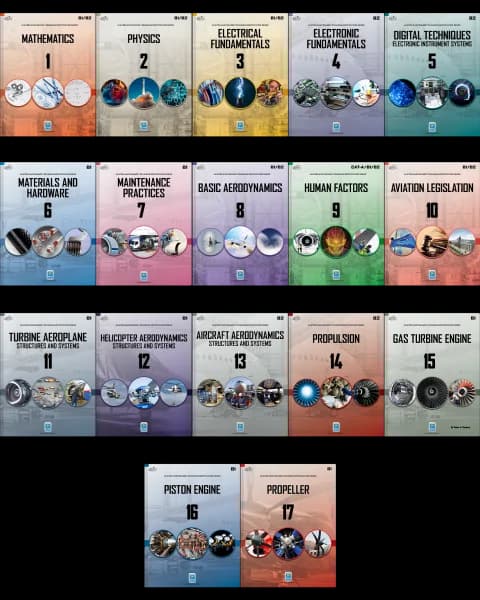
B1.1 + B2 Combined Manual Library cover
LibraryB1.1B2

B1.1 + B2 Combined Manual Library

19 volumes · 15 modules · save 218.80 US$

  • 19 volumes in one library
  • Save 218.80 US$ against single volumes
US$896.25US$1115.05

You save US$218.80 against single items

Details

EASAPART66.EU is an independent learning platform. Study manuals and courses support exam preparation and familiarisation; they do not replace approved Part-147 training, a type-rating course or the examination set by your competent authority. Prices are in US dollars; other currencies are indicative.